
ETIM – A standardized way to manage technical product data

What is ETIM?
ETIM is a standardized data model that defines product classes, features, and in some cases values. It enables technical product data to be presented in a structured format that different systems can read and process automatically.
The ETIM model mainly consists of the following parts:
- Classes - define the product category
- Features - describe the product’s technical characteristics
- Values - the specific values of those features in certain cases
- Units - for example mm, kg, V, or W
Thanks to this structure, technical product data can be presented in the same way regardless of the manufacturer or system.
Why is the ETIM standard used?
Technical product information is often complex and may vary between manufacturers. With the ETIM standard, this data can be presented consistently, making it much easier to compare products and search for information.
The key benefits of the ETIM standard include:
- Consistent technical product data across different systems
- Easier product comparison and search
- Better data exchange between manufacturers and retailers
- Less manual data handling
- Better data quality and reliability
For this reason, many manufacturers, wholesalers, and system providers use the ETIM standard as part of their product data management.
Where is the ETIM standard used?
ETIM is widely used in various systems and data environments. The standard is used for example in:
- PIM systems
- ERP systems
- eCommerce platforms
- datapool services
- design and project systems
ETIM often serves as the foundation for technical product data, on top of which other product data models and structures are built.
Summary: ETIM makes technical product data compatible
The purpose of the ETIM standard is to ensure that technical product data is structured, comparable, and easy to transfer between different systems. When products are described according to the ETIM model, the same data can be used across multiple channels without separate editing.
This improves data quality, reduces manual work, and makes product data management more efficient throughout the supply chain.
FAQ - Frequently asked questions about the ETIM standard
What does ETIM stand for?
ETIM stands for ElectroTechnical Information Model. It is a technical product data standard used for product classification and the management of technical attributes.
Is ETIM a mandatory standard?
ETIM is not generally mandatory, but it is widely used as a market standard in the electrical, HVAC, and construction industries, as well as in many datapool and product data environments.
How is ETIM different from a normal product group?
A product group generally tells which category a product belongs to. ETIM, on the other hand, defines not only the product class but also the technical characteristics and their values in a standardized format.
Can a company’s own product data be converted into the ETIM structure?
Yes. A company’s own product data can be converted into the ETIM structure when the right data model and a system that supports classifications, specifications, and values are in place.
Why is ETIM useful in product data management?
ETIM makes data easier to compare, reduces manual work, and enables smooth transfer of technical product data between different systems and stakeholders.
How does ETIM work in Pimmix?
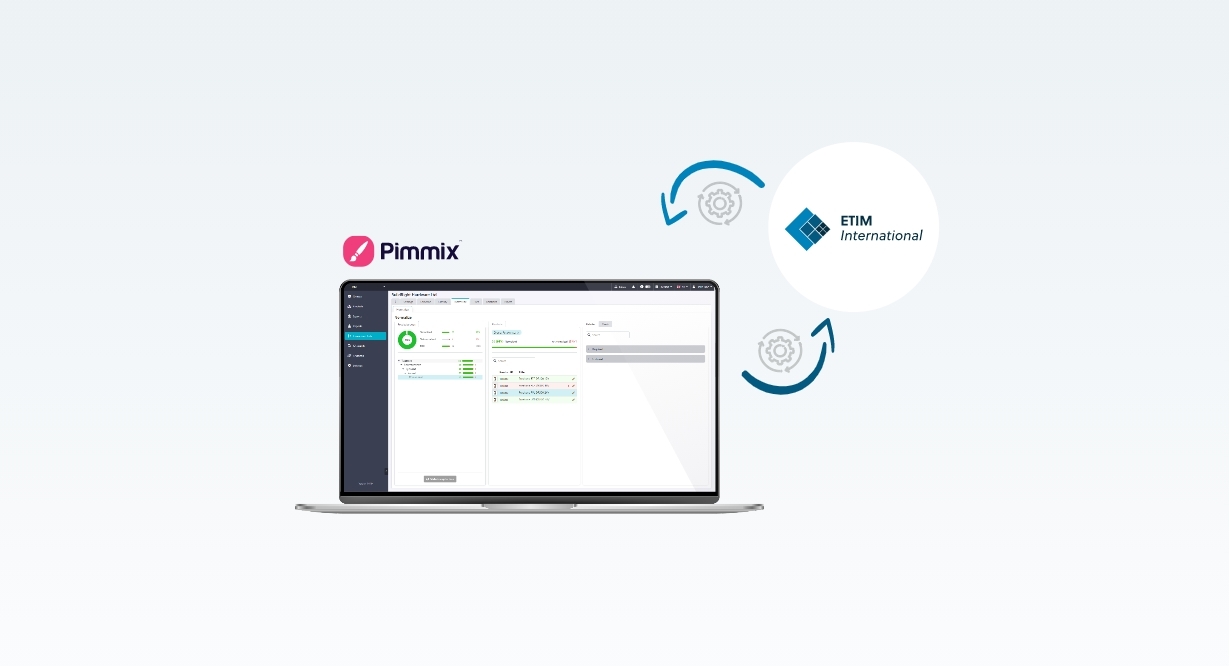
The ETIM standard is built into Pimmix, making it easy to convert a company’s own product data into the ETIM structure. This includes for example:
- ETIM classifications
- technical specifications
- feature values
The ETIM standard is connected to the system through an API interface. When the standard is available in the system, a company’s own product data can be automatically converted into the ETIM model either when data is imported into the system or when it is exported to other systems and stakeholders.

Markus Rahkonen
Co-founder
"Get in touch and we’ll show you how Pimmix can use the ETIM standard in product data management and make data conversion and distribution significantly easier."
Call | Email | Send a message | Book a demo

Read more about the topic
Explore related topics to learn more about product data management, automation, and integrations. The articles below provide additional insights into how product data can be collected, structured, managed, and shared more efficiently across different systems and channels.

Conversion Hub
Product Data Exports
Product Data Imports
Product data management
Product Data Standards
ETIM standard integrated and built in Pimmix
Pimmix supports the ETIM product data standard within the platform. Companies can access the official ETIM classification structure, connect their own product data to ETIM attributes, or automatically convert their data to the ETIM format when required. Instead of maintaining parallel data structures or manually mapping attributes in multiple places, Pimmix allows companies to manage their own product data structure while connecting it to ETIM seamlessly. This significantly reduces manual work and ensures that product data can easily be exchanged with partners, data pools, distributors, and marketplaces that require ETIM classification.