
GS1 – International standard for the management of product information and identifiers

What is GS1?
GS1 is a global standards system that defines identifiers, barcodes, and data structures for managing products and supply chains. It enables products to be identified unambiguously across different companies and systems.
Key elements of GS1 standards include, for example:
-
GTIN (Global Trade Item Number) – a unique identifier for products
-
GLN (Global Location Number) – an identifier for companies and business locations
-
SSCC (Serial Shipping Container Code) – an identifier for logistic units
-
GS1 barcodes – for identifying products and packages
-
GDSN (Global Data Synchronisation Network) – a network for distributing product data
These standards make it possible to identify products and share their data consistently throughout the supply chain.
Why are GS1 standards used?
Supply chains consist of many different companies, systems, and markets. With GS1 standards, products can be identified and their data can be shared in the same way all over the world.
Key benefits of GS1 standards include:
-
Unambiguous product identification
-
Better supply chain transparency
-
More efficient logistics and inventory management
-
Fewer errors in product data handling
-
Compatibility between different systems
For this reason, GS1 standards are used in practically all retail and logistics systems.
Where are GS1 standards used?
GS1 standards are used in many different business processes and systems. They are utilized, for example, in:
-
retail
-
e-commerce
-
logistics and inventory management
-
ERP and PIM systems
-
datapool services
-
product data distribution to partners and resellers
GS1 forms the foundation for how products are identified and how their data moves through the supply chain.
Summary: GS1 enables a common language for the supply chain
GS1 standards make it possible to identify products unambiguously and share product data between different companies and systems. When products have GS1 identifiers and the data is in a standardized format, the same information can be used efficiently throughout the supply chain.
This improves data quality, enhances logistics, and makes product data management easier for manufacturers, retailers, and other stakeholders alike.
FAQ – Frequently asked questions about GS1 standards
What does GS1 mean?
GS1 is an international organization that develops standards for product identification and supply chain information management.
What is GTIN?
GTIN (Global Trade Item Number) is a GS1 standard that serves as a unique identifier for products. It is usually the same number that appears in the product barcode.
Is GS1 the same as a barcode?
Barcodes are one part of the GS1 standard. GS1 defines the identifiers and data structures that barcodes use.
How is GS1 related to product data management?
GS1 standards make it possible to identify products unambiguously and share product data between different systems and companies.
How is GS1 related to datapool services?
Datapool services are based on GS1 standards and use them to distribute product data between manufacturers and retailers.
How does GS1 work in Pimmix?
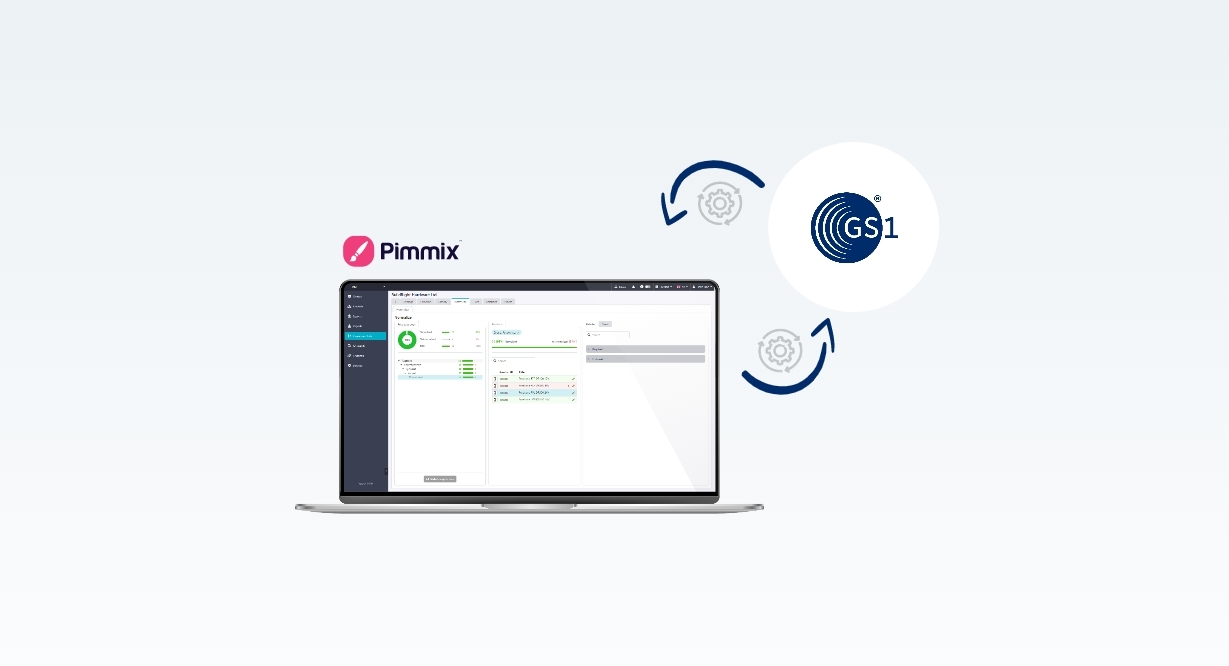
The Pimmix system has built-in support for GS1 standards, such as GTIN identifiers and product data structures. This makes it possible to connect / convert a company’s own product data into a GS1 structure and use it, for example, in datapool services.
The GS1 data model is integrated into the system. When the standard is in use in the system, the company’s product data can be easily transformed and shared with different systems, partners, and market channels without manual work.

Markus Rahkonen
Co-founder
"Get in touch and we’ll show you how Pimmix can leverage GS1 standards in product data management and make data distribution between different systems and stakeholders significantly easier."
Call | Send email | Contact form | Book a demo

Read more about the topic
Explore related topics to learn more about product data management, automation, and integrations. The articles below provide additional insights into how product data can be collected, structured, managed, and shared more efficiently across different systems and channels.

Artificial Intelligence (AI)
Conversion Hub
Customer cases
Product Data Exports
Product Data Imports
Product data management